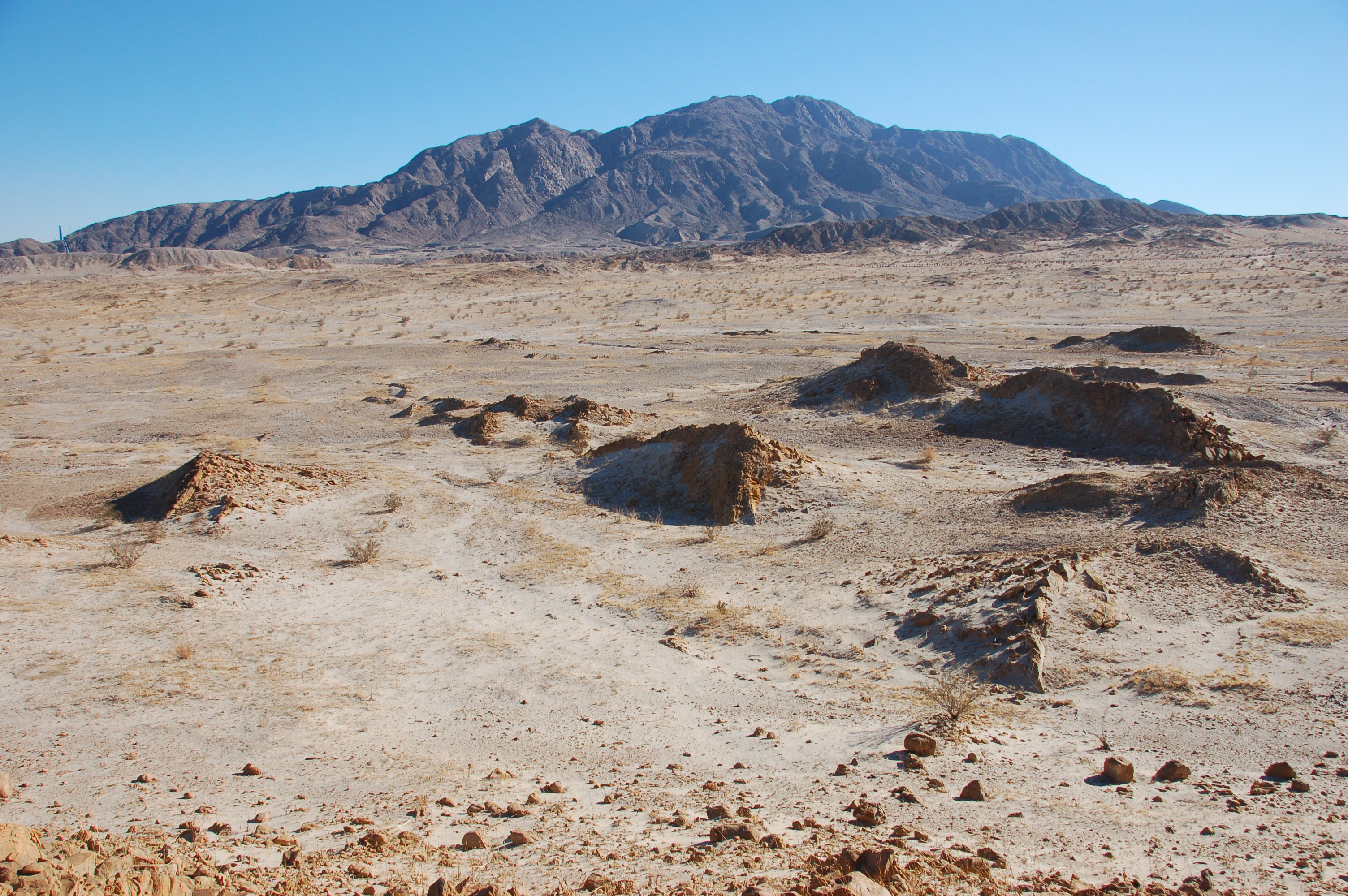
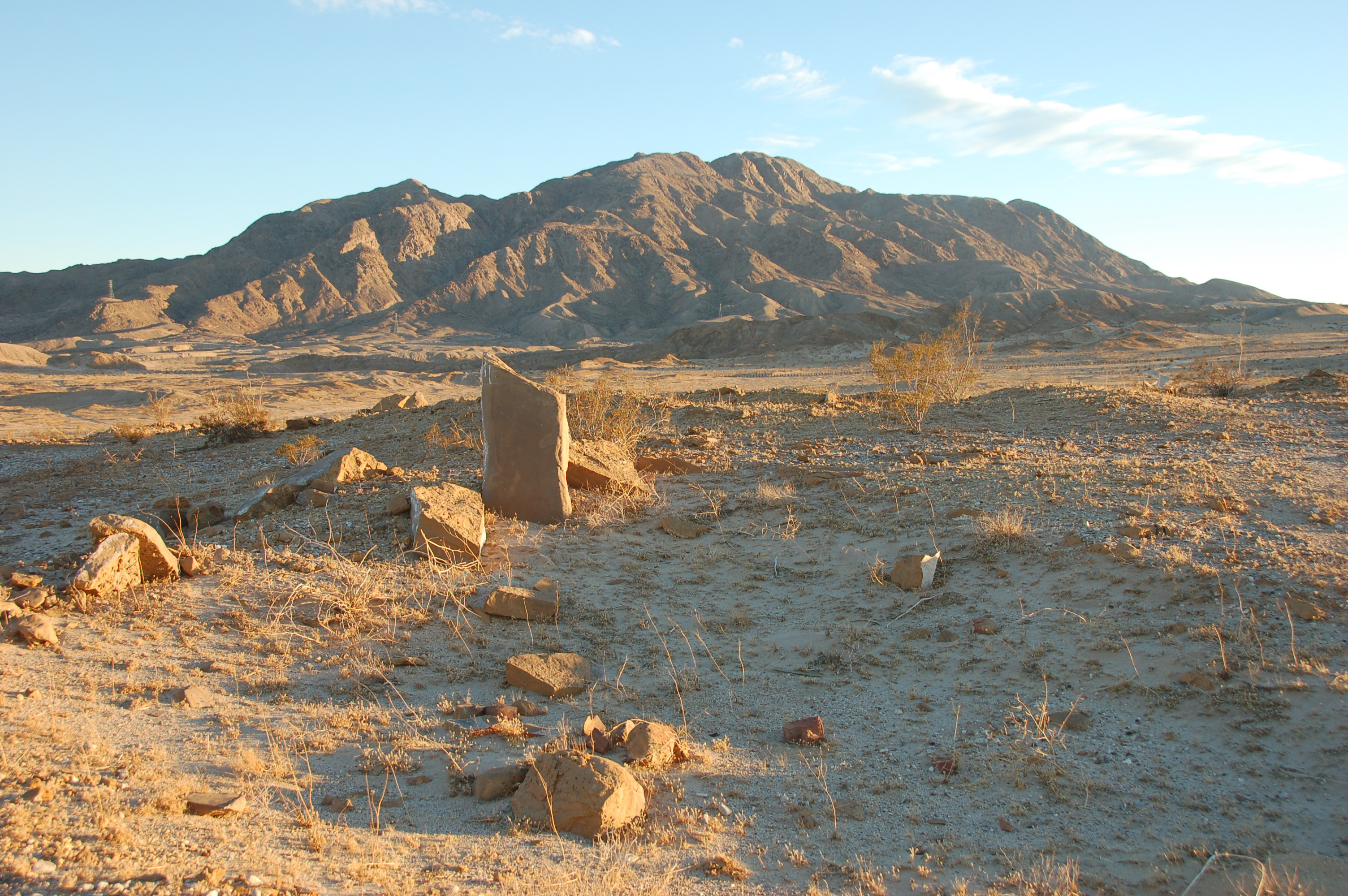
The Salton Sea, Imperial Valley, California.
The Salton Sea is a large, shallow, saline lake in the Colorado Desert — an accident of history, created in 1905 when an irrigation canal breached and drained the Colorado River into the Salton Sink for two years before engineers could stop it. It has no natural outlet. It’s been getting saltier and shallower ever since.
I grew up knowing the Salton Sea as a fact of the landscape. It’s visible from the highway driving into the valley. You can smell it in certain winds. The shores are ringed with the bones of fish and birds — tilapia went in and eventually the salt and the algae and the lack of oxygen killed them.
It used to be a major Hollywood getaway area. People had beach houses there in the 1950s and 60s. The Sea had marinas and resorts and speedboat races. Then the water quality declined, the fish died, the smell intensified, and the resort community collapsed into something that looks like a post-apocalyptic vacation.
Salvation Mountain is nearby — Leonard Knight’s colorful folk-art mountain, hand-built over decades, covered in paint and religious text and a specific kind of American visionary exuberance. “Slab City” is the informal community of desert dwellers who live in the abandoned Naval base next to it.
I drive through this area when I’m visiting El Centro. The landscape has a specific beauty that’s inseparable from its strangeness. Ruined resort towns in the desert. An inland sea that smells of algae. Folk art mountains. Dead fish.